The effect of soil type on yield and macro- and micronutrient content of a wide range of pasture species
Darch, Tegan
, Blackwell, Martin
, Hood, Jess
, Lee, Michael, Storkey, Jonathan
, Beaumont, Deborah and McGrath, Steve
(2022)
The effect of soil type on yield and macro- and micronutrient content of a wide range of pasture species.
[Data Collection]
The objective of the experiment that generated this dataset was to determine the effect of soil type on the micronutrient content of pasture species (a range of grasses, legumes and forbs). The experiment was conducted in a controlled environment facility. Data are presented on the dry matter yield of each species and the concentration of 21 elements measured in the herbage (Al, As, Ca, Cd, Co, Cr, Cu, Fe, K, Mg, Mn, Mo, Na, Mi, P, Pb, S, Se, Ti, Zn and I). Data are also presented on the total and extractable concentration of elements in the soil, as well as details of nutrient/fertilizer addition and experimental design.
| Item Type | Data Collection |
|---|---|
| Creators | Darch, Tegan, Blackwell, Martin, Hood, Jess, Lee, Michael, Storkey, Jonathan, Beaumont, Deborah, McGrath, Steve |
| Contributors | Darch, Tegan |
| Keywords | pastures; grasslands; legumes; trace elements; essential plant nutrient; soil |
| Project | S2N - Soil to Nutrition - Work package 1 (WP1) - Optimising nutrient flows and pools in the soil-plant-biota system, S2N - Soil to Nutrition - Work package 2 (WP2) - Adaptive management systems for improved efficiency and nutritional quality |
| Date | 25 August 2022 |
| Geographic coverage | Acid strip soil sampling location (high_pH and low_pH) Grassland soil sampling location (NW) |
| Bounding Area |
North Latitude East Longitude South Latitude West Longitude UNSPECIFIED UNSPECIFIED 51.8126 -0.375816 |
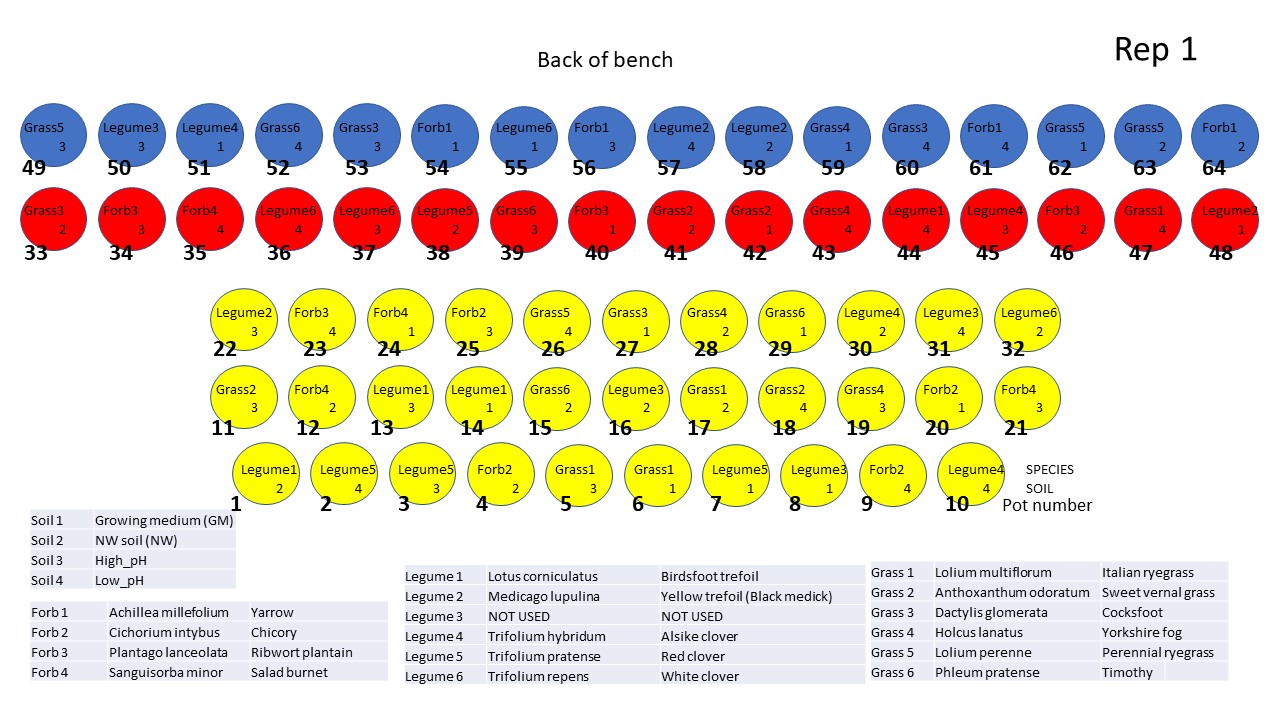
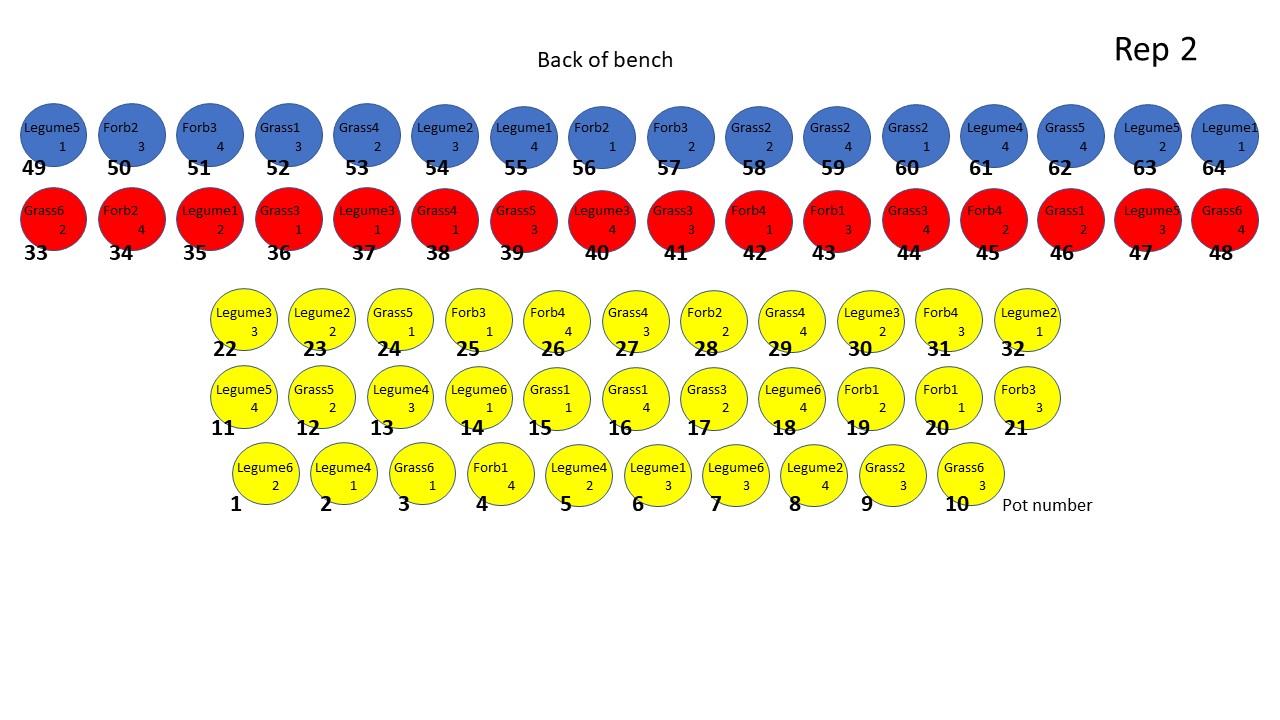
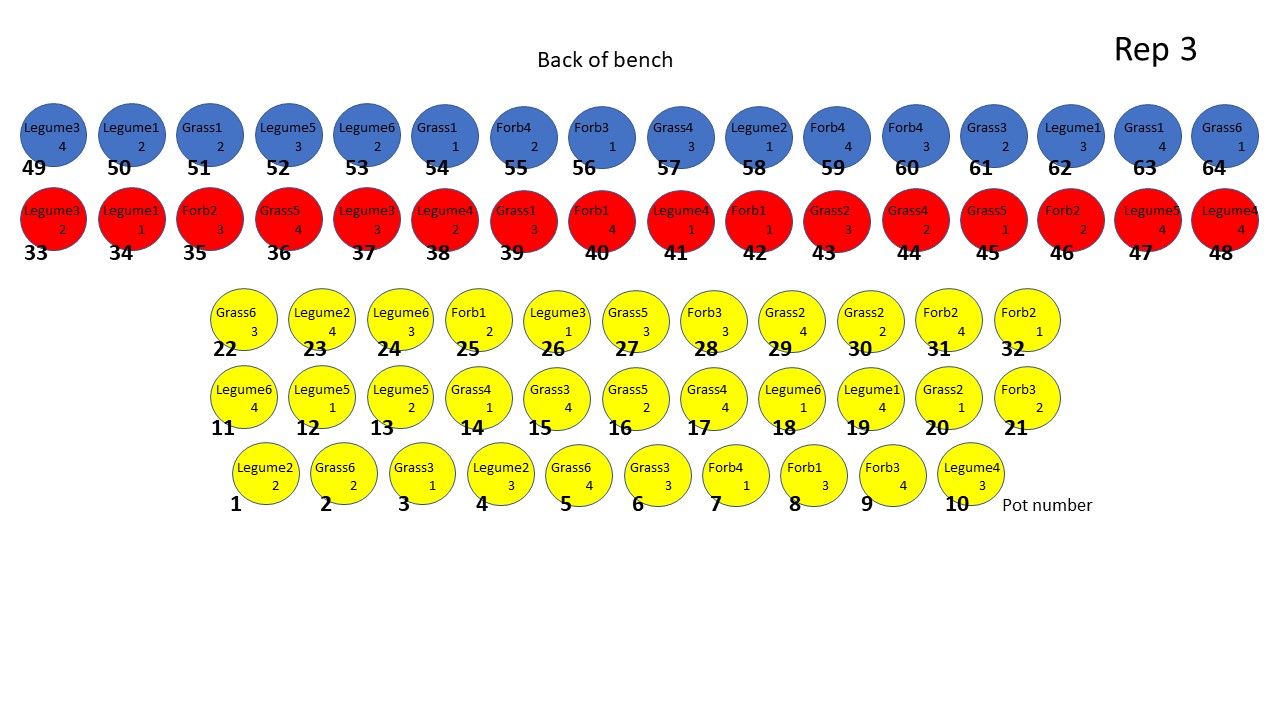
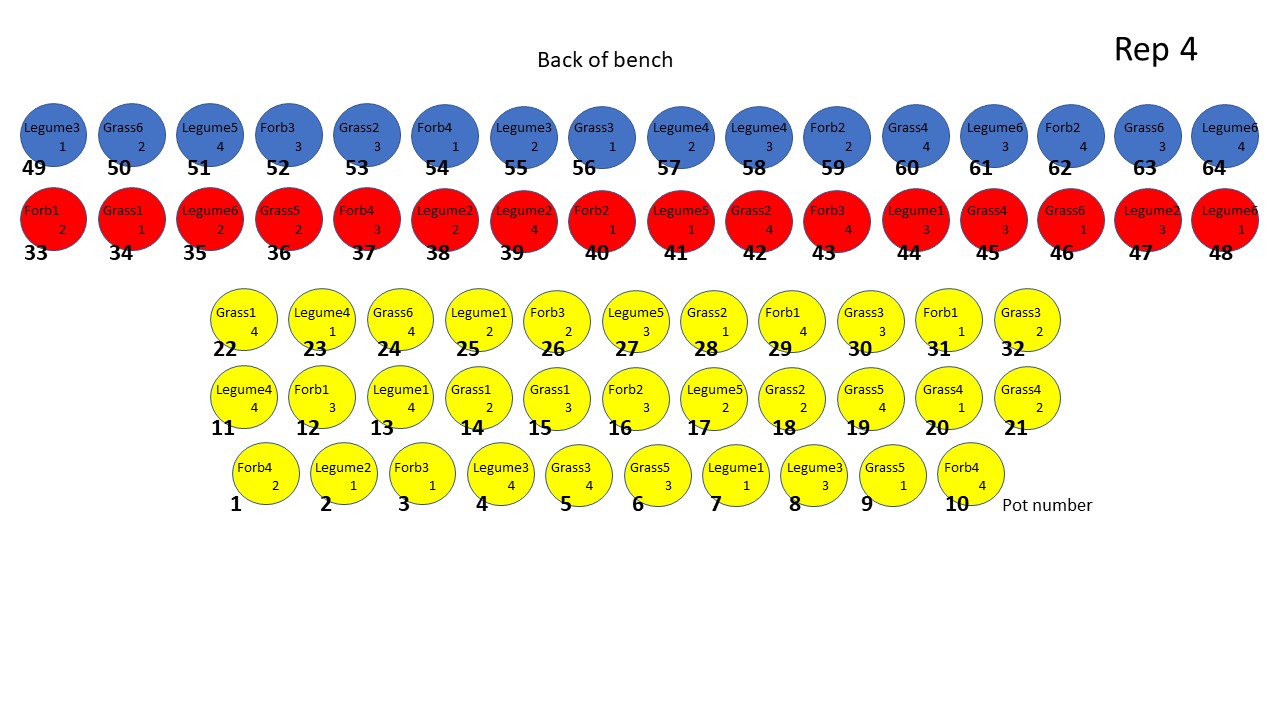
| Data collection method | Four soils were used in this experiment (note that this includes a growing medium, which is referred to as a soil for brevity). Two soils (high_pH and low_pH) were taken from a long-term experiment at Rothamsted Research (Hertfordshire, UK) known as the ‘Acid Strip’ which has a pH gradient of 3.7 to 7.8 (Rothamsted Research 2021). The soil is classified as a well-drained to moderately well-drained Typic Paleudalf with a flinty silty clay loam topsoil and is sown to wheat every year. Soils were taken from two locations along this strip by sampling down to 23 cm in a W across the width of the acid strip. Soils were collected in August 2020 following the wheat harvest. The pH of the high_pH soil was slightly lower than we were aiming for, and an acid-drop test indicated that the free carbonate, which might be responsible for the binding of micronutrients, was low. An addition of 0.03% CaCO3 by weight increased the soil pH by ~0.2 units to pH 7.5 within 2 weeks when the soil was held at its water holding capacity, and that soil pH then stabilised. A grassland soil (NW) was sampled from the North Wyke Farm (Devon, UK). The soil was classified as an Aeric haplaquept, and a clayey typical non-calcareous pelosol in head from clay soil and had been under permanent pasture with a history of minimal fertilizer application. Soils were collected from the loose topsoil of land recently ploughed to 15cm, in a W across the field. Finally, a growing medium (GM; ‘Rothamsted prescription soil’, Petersfield Growing Mediums, Leicester, UK) (Darch et al. 2020) which contained 80% sterilised loam, 15% 2EW sand and 5% lime free grit (5mm). All soils were air-dried and sieved to <10 mm before use. Soil nutrient assessment: soils were assessed for their nutrient status (Soil_pre_nutrient_addition.csv), amended with NPK according to UK fertilizer recommendations (Nutrient_addition.csv) and their nutrient status reassessed (Soil_post_nutrient_addition.csv). Note that not all analytes were assessed both pre- and post-nutrient addition. Growth trial: cylindrical pots of 9 cm diameter and 30 cm height were loosely filled with soil (Experimental_design.csv, Pot_layout.JPG). Soils were wetted to 60 % WHC using MQ water and maintained at this moisture content for two weeks, covered with black plastic, in the controlled environment room. Seeds were sown at a rate of 0.4 g/pot (630 kg/ha) and covered with a thin layer of soil. Pots were covered with black plastic until germination had started, typically within ~3 days of seed addition. NPK was added two weeks after seeds were sown, as specified in Nutrient_addition.csv. As plants grew, a clear acetate collar was placed around the pot and moved upwards as the plant grew to ensure vertical growth of herbage and to prevent damage during watering. Five weeks after sowing seeds, plants were harvested at soil level. Stems were rinsed in MQ water to remove any soil contamination. Herbage was frozen, freeze dried, weighed to determine dry matter yield, and then finely milled. Herbage nutrient content was assessed (herbage.csv) Analysis methods: Total oxidised N and ammonium-N using a 2:1 ratio of KCl solution to moist soil, 1 hr shaking and filtration through Whatman grade 2 filter papers (8 µm particle retention), and analysed using an Aquachem 250 discrete photometric analyser (Thermo Fisher Scientific). The remainder of the soil analyses were on air dried, <2mm soil. Extractable P was assessed by Olsen P extraction (Olsen et al. 1954), and extractable K and Mg by ammonium nitrate extraction (Standing Committee of Analysts (DoE) 1979) by NRM (Berkshire, UK). Soil pH was measured in water (1:2.5 soil:water), and Mehlich III extractable Cu, Zn, Fe, S, Co and Mn were analysed by ICP-OES (Mehlich 1984, NRM, Berkshire, UK). Total micronutrient concentrations were determined via aqua regia digest for soil (McGrath and Cunliffe 1985), and nitric perchloric digestion for plant material (Zarcinas et al. 1987), followed by ICP-MS (NexION 300X Inductively Coupled Plasma – Mass Spectrometer, Perkin Elmer) and ICP-OES (Optima 7300 DV Inductively Coupled Plasma – Optical Emission Spectrometer, Perkin Elmer) analysis. Soil organic carbon (SOC) was measured by loss on ignition (450 oC for 10 hours). Soil and herbage I was analysed using a 25% tetramethylammonium hydroxide (TMAH) extraction for 4 hours with analysis by ICP-MS by NUVetNA (University of Nottingham, UK). All analyses were conducted in triplicate. |
| Publisher | Rothamsted Research |
| Digital Object Identifier (DOI) | 10.23637/rothamsted.989q8 |
Table_units_and_descriptors.csv
Download this file
Share this file
Experimental_design.csv
Download this file
Share this file
Herbage.csv
Download this file
Share this file
Nutrient_addition.csv
Download this file
Share this file
Soil_post_nutrient_addition.csv
Download this file
Share this file
Soil_pre_nutrient_addition.csv
Download this file
Share this file
Pot_layout_rep_1.JPG
Download this file
Share this file
Pot_layout_rep_2.JPG
Download this file
Share this file
Pot_layout_rep_3.JPG
Download this file
Share this file
Pot_layout_rep_4.JPG
Download this file
Share this file
Machine_readable_table_metadata.json
-
subject - Other
-
- Available under Creative Commons: Attribution 3.0
description - application/json
- folder_info
- 41kB
Download this file
Share this file
Downloads
ORCID: https://orcid.org/0000-0003-2367-043X
ORCID: https://orcid.org/0000-0001-5540-6233
ORCID: https://orcid.org/0000-0003-0182-4792
ORCID: https://orcid.org/0000-0003-1094-8914
ORCID: https://orcid.org/0000-0003-0952-8947